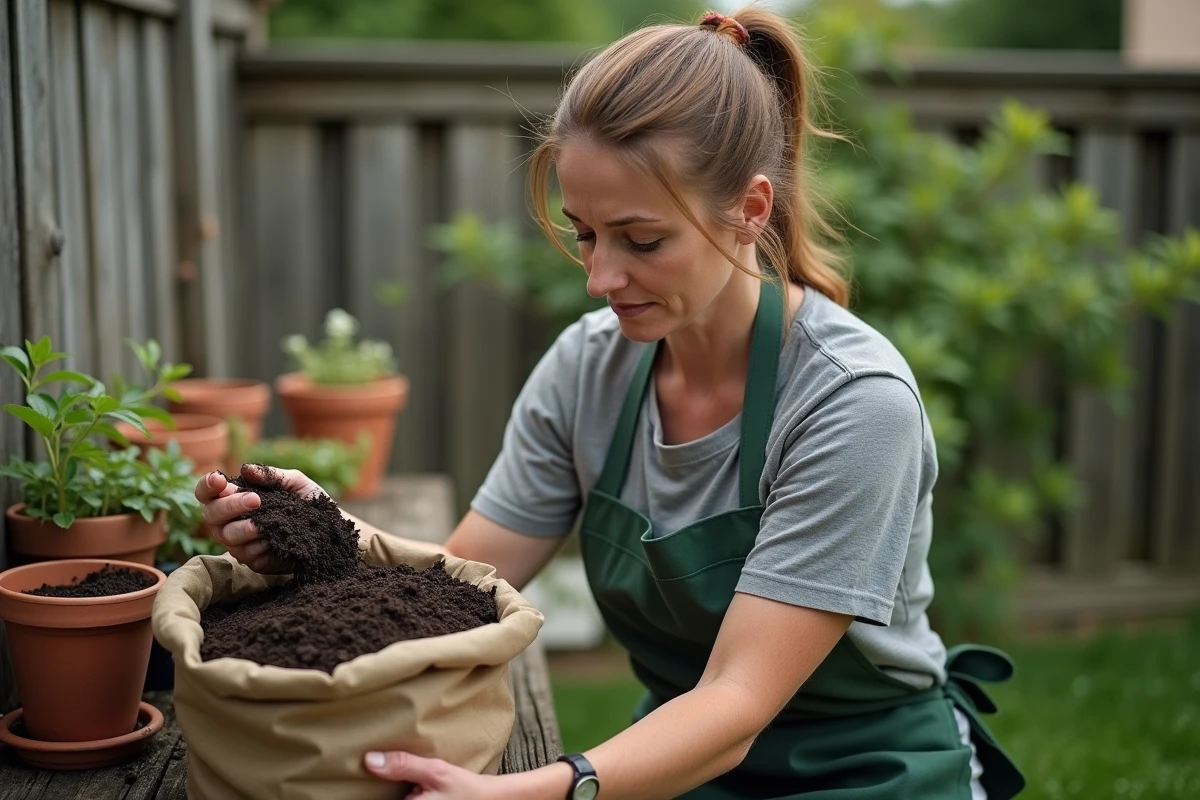
A bag of potting soil found at the back of the garage after two seasons raises a legitimate question: is this substrate still usable, or has it lost its properties? The answer depends less on a date printed on the packaging than on the actual condition of the mix. Structure, water retention capacity, biological activity: these parameters degrade at different rates depending on the composition of the potting soil and its storage conditions.
Functional lifespan of potting soil: what manufacturers communicate
Since 2022-2023, several professional substrate manufacturers (Fafard-Sun Gro Horticulture, Florentaise) have abandoned the notion of a fixed expiration date to talk about functional lifespan. The principle: potting soil does not suddenly become unusable on a specific date, but gradually loses its structure and water retention capacity.
Formulations rich in peat or wood fibers are the most affected. From the second year of storage, even in a closed bag, the organic matter decomposes. The potting soil compacts, and the pores that held air and water disappear.
| Condition of the potting soil | Structure | Water retention | Nutrients | Possible use |
|---|---|---|---|---|
| New (closed bag, less than one year) | Airy, crumbly | Optimal | Available depending on the formulation | Sowing, repotting, pot culture |
| Stored closed for two years | More compact | Reduced | Partially degraded | Mix with new substrate or soil amendment |
| Opened for one season, stored protected | Variable | Variable | Very depleted | Mix or light mulching |
| Used (served in a pot for one season) | Compacted, fine | Low | Exhausted | Partial component of a new substrate |
Asking if potting soil expires thus comes down to assessing where the substrate stands on this degradation scale, rather than looking for a deadline.
Concrete signs of expired potting soil: DIY tests
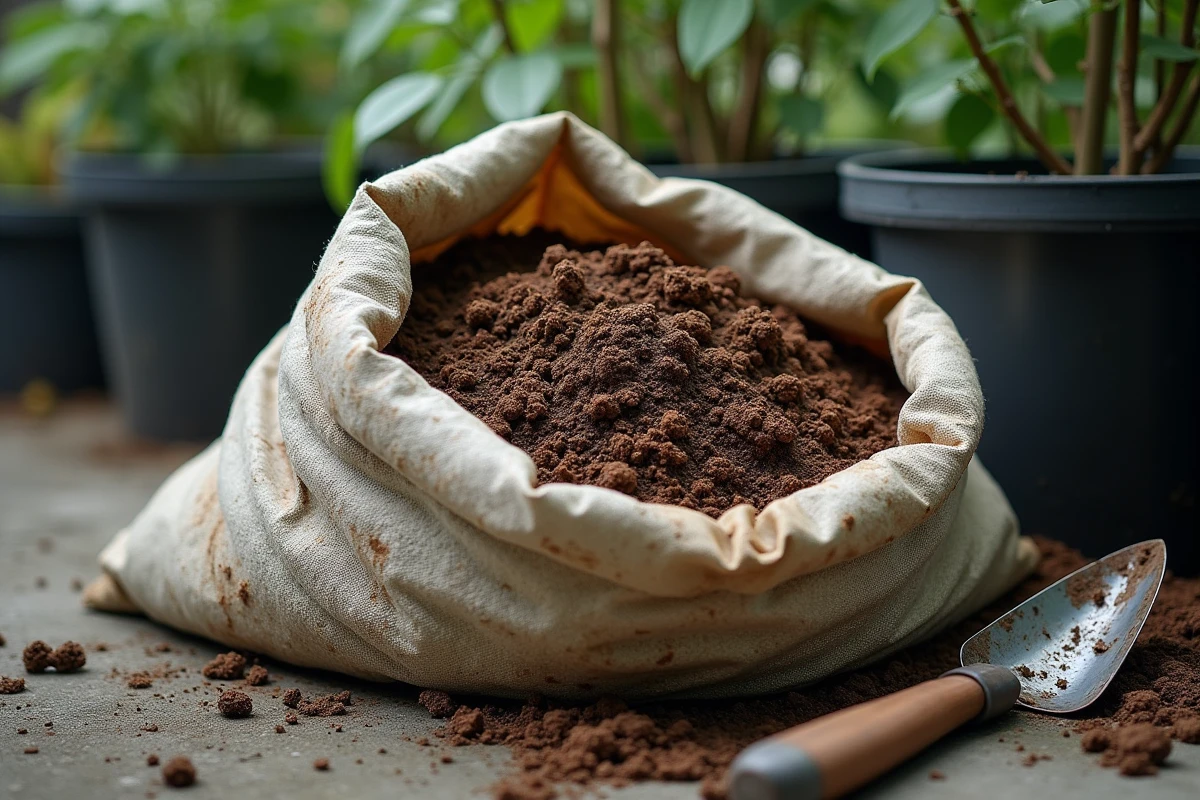
Direct observation remains the most reliable diagnosis. Three indicators allow for a decision without special equipment.
Texture and smell
Good quality potting soil smells like a forest after rain, a fresh earthy scent. Degraded substrate emits a sulfur or ammonia smell, a sign of anaerobic decomposition (without oxygen). The organic matter has fermented instead of composting.
When touched, used potting soil forms a compact mass, sometimes crusty on the surface. When squeezed in the hand, it no longer crumbles easily. This loss of structure directly compromises drainage and root aeration.
Water absorption test
Pour water over a handful of dry potting soil. A functional substrate absorbs water within seconds. Degraded potting soil, especially if it contains decomposed peat, repels water on the surface like a hydrophobic material. Water runs off without penetrating. This hydrophobic phenomenon is one of the most common problems with old peat-based potting soils.
Presence of mold or larvae
White filaments on the surface do not always indicate a serious problem: some saprophytic fungi naturally colonize moist organic matter. However, green or black mold accompanied by a foul odor indicates a substrate unsuitable for direct cultivation.
- Light white mold on the surface: generally benign, simply remove the affected layer
- Green or black mold, strong odor: the potting soil has undergone advanced degradation, do not use for sowing or sensitive plants
- Presence of fungus gnat larvae (sciarids): a sign of prolonged excessive moisture, the substrate must be sanitized before any reuse
Reusing used potting soil: the 30% maximum rule
Discarding aged potting soil is not always necessary. Tests conducted by Ohio State University Extension have shown that used potting soil limited to 30% of the total volume of a new substrate did not significantly impact the growth of chrysanthemums in a greenhouse, provided that fertilization is rebalanced.
This 30% threshold serves as a useful guideline for the amateur gardener. Beyond this, the lack of structure and nutrients in tired potting soil weighs on the overall quality of the mix.
Potting soil that housed sick plants
Several North American horticultural extension organizations explicitly advise, since 2021-2022, against reusing potting soil that has housed plants affected by fungal or bacterial diseases. Pathogens (fusarium, pythium, phytophthora) can survive for several months in the substrate.
Potting soil that has held sick plants should not be mixed with new substrate without prior treatment. Solarization (exposure to sunlight under a clear tarp for several weeks in summer) remains the most accessible method for individuals.
- Spread the potting soil in a thin layer on a flat surface
- Cover with clear plastic film, well secured to the ground
- Leave exposed to the sun for four to six weeks during warm weather
- Then mix with mature compost and new potting soil before use
Storage of potting soil: conditions that prolong lifespan
The rate of degradation directly depends on storage conditions. Two factors dominate: humidity and temperature.
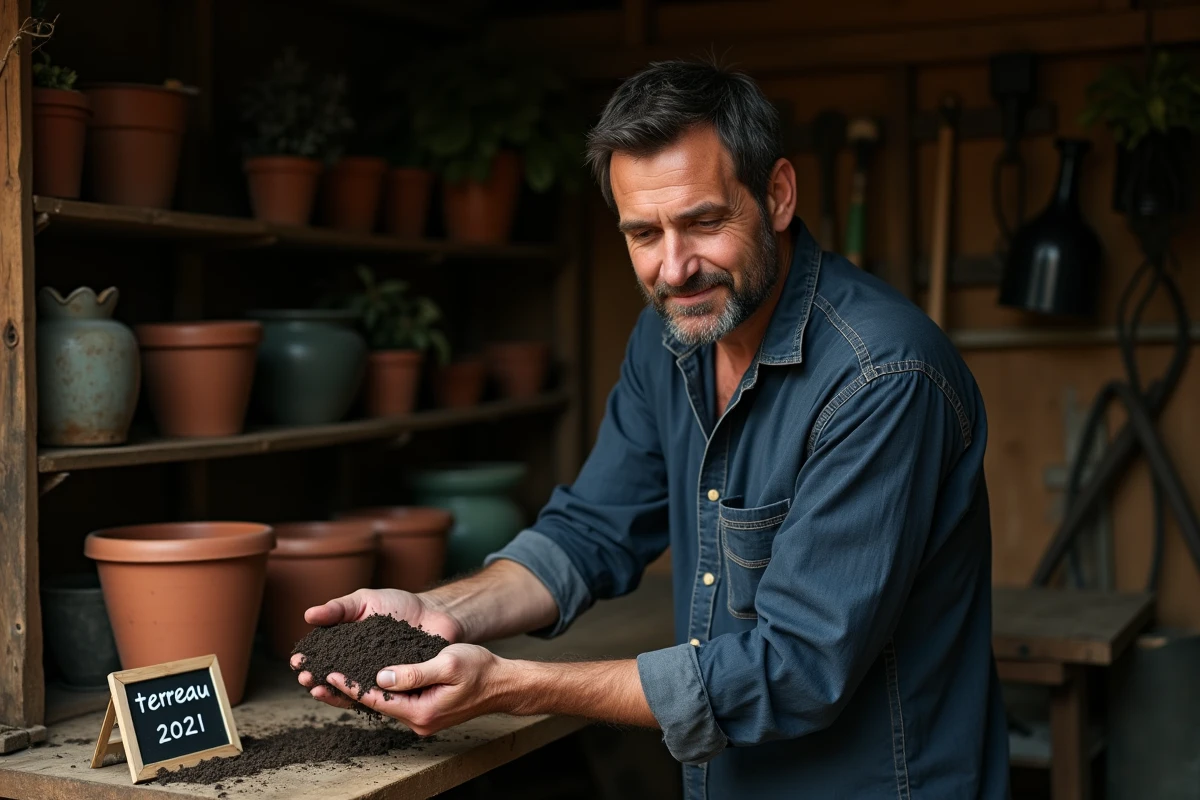
An open bag left outside in the rain loses its properties within a few months. The same bag, resealed and stored in a cool, dry place away from light, retains a usable structure for much longer.
The container also matters. Original plastic bags, even resealed with a tie, allow ambient moisture to pass through. Transferring unused potting soil into a sealed container with a lid limits exposure to water and temperature fluctuations. Potting soil stored under these conditions maintains a proper structure to serve as a mix component the following season.
The initial composition of the potting soil also influences its longevity. Coconut fiber-based substrates degrade more slowly than those based on blonde peat, as coconut fiber is more resistant to biological decomposition. For a gardener who does not use all their potting soil in one season, choosing a coconut-based substrate extends the window of use.
Potting soil that smells good, absorbs water, and crumbles easily between the fingers remains a functional substrate, regardless of the purchase date. The nose and hands are more reliable diagnostic tools than a label.