
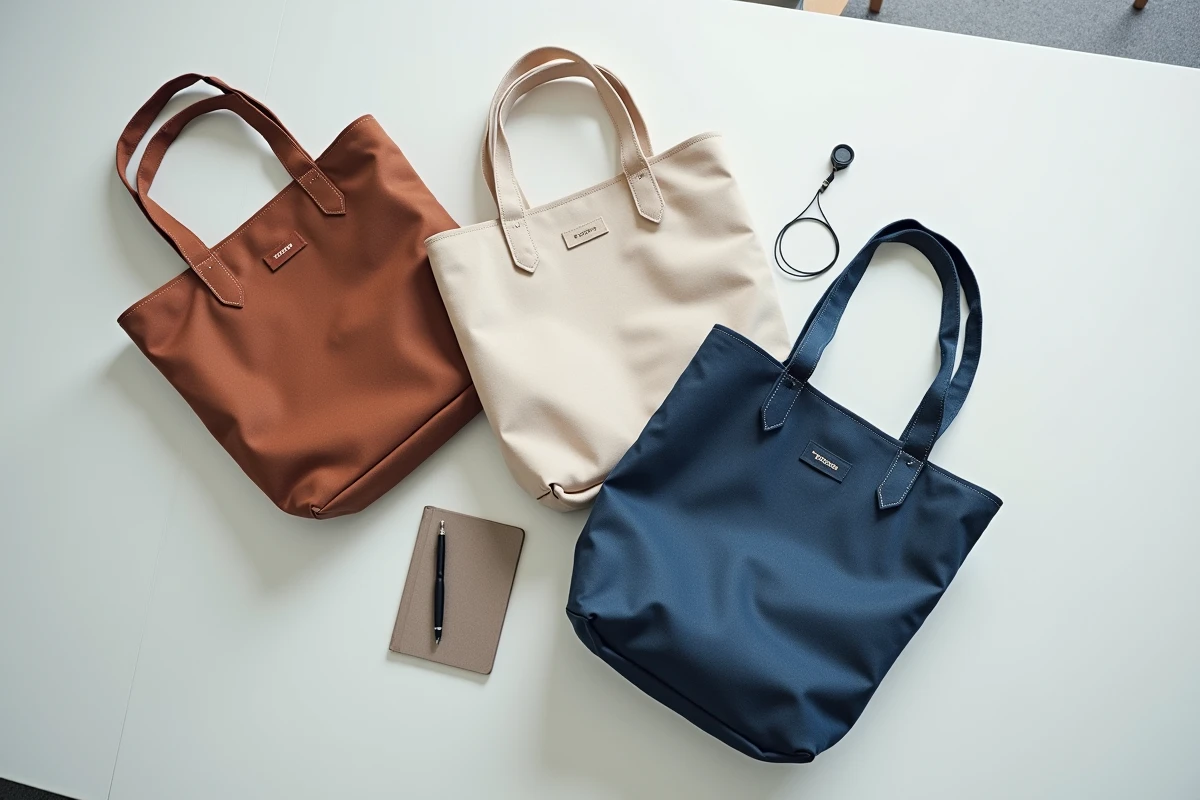
When a works council looks for a year-end gift that won’t end up at the back of a cupboard, the choice often falls on everyday products. Isotoner totes and accessories regularly appear on B2B buyers’ shortlists, not just for their public recognition. Behind this purchase lies a more intricate mechanism related to employee well-being policies and the logistical constraints of distributing companies.
Isotoner Gift Sets and QVT Policy: A Concrete Lever for HR Services
In recent years, there has been a rise in “comfort at work” gift sets in business gift catalogs. Slippers, umbrellas, blankets: these Isotoner products appear in selections at trade shows like Omyague or France Promotions, categorized under well-being and quality of life at work.
For an HR department, offering an Isotoner product embodies a QVT approach without falling into gimmickry. The slipper or tote bag fits into the employee’s daily life, especially in remote work situations. It’s not a promotional item with a logo that gets forgotten; it’s an accessory used at home.
As detailed on Info Entreprises, professional buyers who turn to this brand often do so as part of a structured CSR policy. The corporate gift then becomes a budget item aligned with measurable internal satisfaction objectives, not just a symbolic gesture.
Feedback on this point varies depending on the size of the company: a small business with fifty employees does not have the same customization constraints as a large group ordering several thousand units. The logic remains the same, but the execution differs.

Isotoner Logistics Reliability: What It Means for Partner Distributors
The impact on the supply chain is less often discussed, yet this is where the purchase of Isotoner products directly influences the performance of a client company. Isotoner France has embarked on a logistics reorganization project, doubling its storage space, led by its logistics director Jérôme Labro.
The stated goal is to support an expected growth of over ten percent, particularly driven by e-commerce and marketplace sales. For a partner distributor, this translates into more reliable restocking and reduced order preparation times.
What Doubling Warehouse Space Means in Practice
When a distributor lists a brand like Isotoner, they bet on its ability to deliver on time, especially during seasonal peaks (back-to-school, holidays). The ongoing logistics project in Cantal, the company’s historic headquarters, aims precisely to absorb these peaks without interruption.
Specifically, partner companies can expect:
- An improvement in shelf availability rates, thanks to expanded storage capacities and better volume forecasting
- Shorter delivery times on B2B and marketplace orders, with the planned integration of a WMS (warehouse management system)
- A smoother dropshipping model for retailers who do not want to manage Isotoner stock themselves
A supplier that invests in its logistics reduces the operational risk for its clients. This is a selection criterion that professional buyers increasingly incorporate into their calls for tenders.
Isotoner Brand Recognition: A Measurable Asset in B2B Purchases
Isotoner is a brand that employees know. This detail, which may seem trivial, carries significant weight in the purchasing decision of a works council or a purchasing manager. A gift from a recognized brand generates a perceived satisfaction rate significantly higher than an equivalent product without recognition.
The company, founded over a century ago in Cantal, benefits from a strong territorial anchoring. The recent transition under French ownership (following the sale by the American Totes Isotoner Corporation to Marquee Brands) has reignited interest in the “made in France” aspect or at least “managed from France.”
Why the Brand Facilitates Purchasing Decisions in Companies
A B2B buyer who chooses Isotoner does not need to justify their choice extensively to their management. The brand’s recognition shortens the internal validation cycle. One does not spend three meetings explaining why a particular slipper supplier was chosen.
This ease of decision-making has a positive indirect cost: less time spent in committee, reduced risk of contestation, and a high adoption rate of the gift by employees. For companies that structure their purchases around performance indicators (cost per employee, gift usage rate, satisfaction feedback), Isotoner ticks several boxes without additional communication effort.
CSR Positioning and Transparency: The Limits to Know
One cannot discuss the purchase of Isotoner in companies without mentioning a blind spot. The Moralscore analysis assigns the brand an average rating, highlighting a lack of transparency regarding environmental practices and working conditions. No clear information is publicly available about efforts to reduce ecological impact.
For a company purchasing Isotoner as part of a CSR policy, this ambiguity can pose a problem. A “employee well-being” purchase loses coherence if the supplier does not publish a CSR report. The most demanding purchasing departments are beginning to request documented commitments, not just a positive brand image.
This does not disqualify Isotoner, but it forces the professional buyer to make a trade-off between recognition, product quality, and traceability requirements. In this area, the brand has room for improvement that its competitors in the comfort segment are already exploiting.
The purchase of Isotoner totes in companies is based on three operational pillars: a brand that simplifies decision-making, logistics that is being strengthened, and a well-being positioning that meets QVT expectations. The weak link remains CSR transparency, a topic that B2B buyers are increasingly monitoring closely.