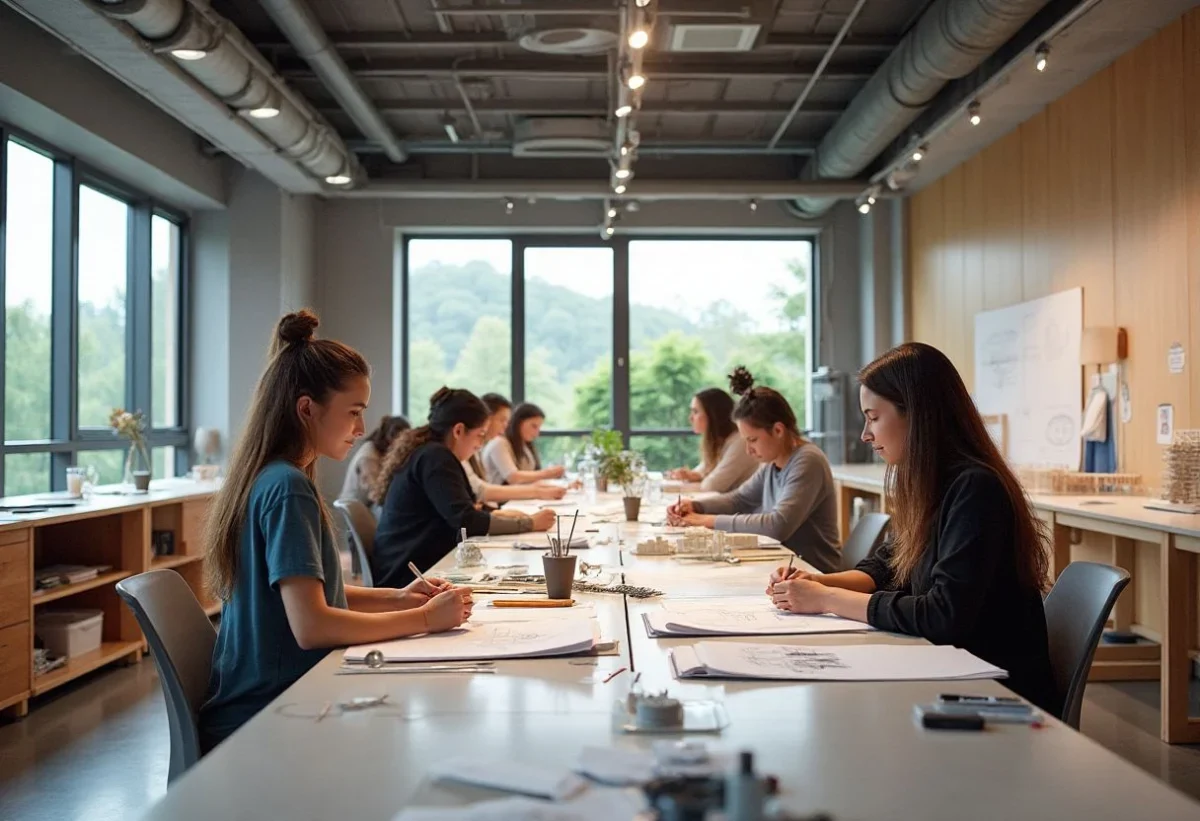
At the intersection of imagination and technique, the art school positions itself as an unparalleled place of growth for creative minds. Combining practical learning with in-depth theoretical reflection, it allows thousands of students each year to give shape to their boldest ideas. But what truly distinguishes one art school from another learning center? And how do these institutions, real incubators of talent, transform artistic dreams into flourishing careers?
The different fields within art schools
An art school offers a variety of fields that cover a wide range of artistic disciplines. Each field provides a unique and specialized approach to art, allowing students to focus on their area of interest.
- Visual Arts: This field focuses on disciplines such as painting, sculpture, and drawing. Students develop their mastery of materials and techniques to express their artistic vision.
- Graphic Design: Here, students explore the world of visual communication. They learn to create works that combine aesthetics and effectiveness, aimed at conveying clear and impactful messages.
- Photography: The photography field offers an in-depth exploration of photographic techniques, from shooting to development and retouching.
- Architecture: Combining creativity and scientific rigor, this field trains the architects of tomorrow, capable of designing functional and aesthetic spaces.
The role of teachers and mentors
Within an art school, the faculty plays a crucial role. These experienced professionals provide not only technical knowledge but also personalized support to students.
Teachers, often artists themselves, share their experiences from the professional world. Their expertise guides students in developing their own style and realizing ambitious projects. They provide essential moral support in the face of artistic challenges.
Moreover, mentors, whether invited occasionally or integrated into the school, serve as sources of inspiration and valuable advice for students seeking guidance in the vast world of art.
Practical workshops: the heart of learning
Beyond theoretical courses, practical workshops are the lifeblood of every art school. They are the space where concepts come to life, and experimentation is encouraged.
- Skill development: Workshops allow students to refine their technical skills and explore new materials.
- Collaboration: They foster exchange and teamwork, essential for artistic growth and the creation of collective projects.
- Innovation: By experimenting, students are often at the forefront of artistic innovation, pushing the boundaries of what is possible.
- Autonomy: These practical sessions enable students to develop their personal discipline and manage their own projects from start to finish.
The impact of art schools on careers
After passing through the doors of an art school, graduates find themselves facing a range of fascinating professional possibilities. These institutions do not just train artists but pave the way for a multitude of diverse careers.
Alumni often become references in their field, whether they choose to work as independent artists, designers, illustrators, or in roles of art direction. Schools also offer internships and networking opportunities that facilitate professional integration.
Thus, these institutions become springboards for careers in industries such as video games, cinema, advertising, and many more.