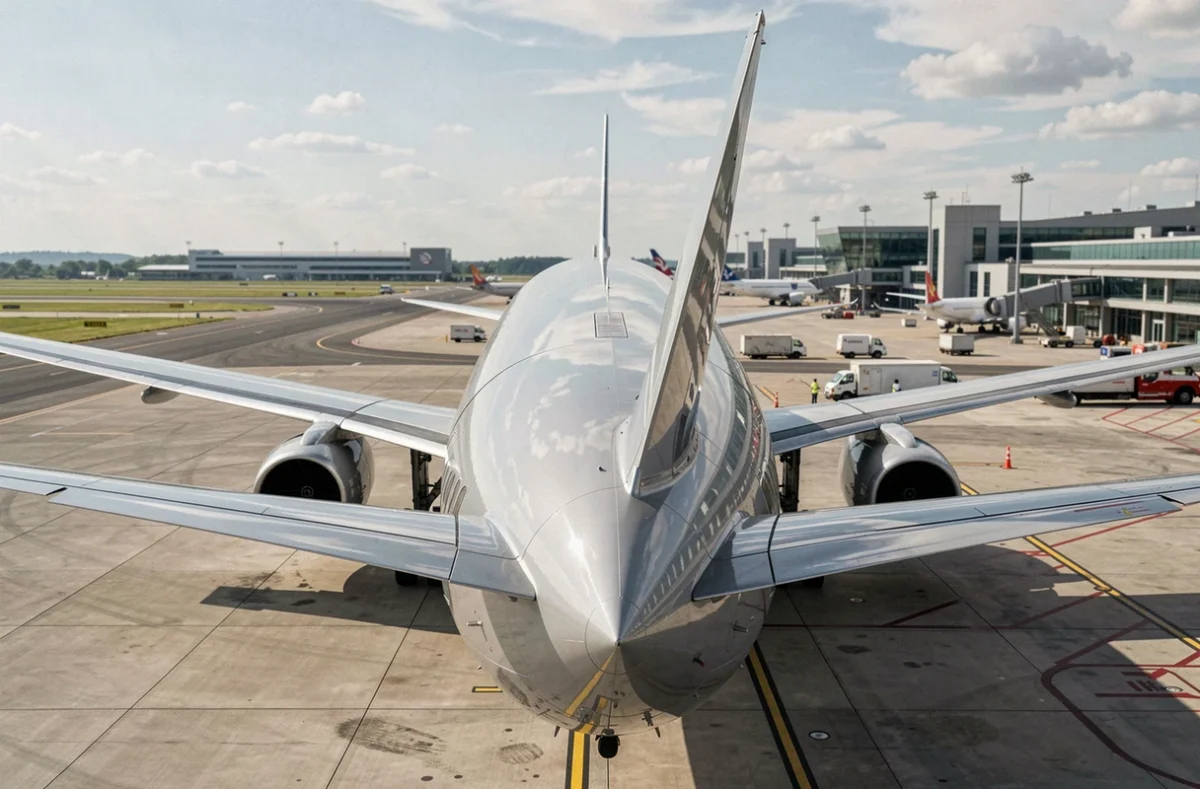
When an airline orders a narrow-body aircraft today, it knows that delivery can slip as far as 2034. This gap between demand and production capacity is reshaping the entire aviation value chain, from the maintenance of aging fleets to the technological choices of engine manufacturers.
The aviation news of recent months converges on a common observation: the sector is advancing rapidly in innovation but is stumbling over industrial constraints that neither Airbus nor Boeing can quickly resolve.
Shortage of new aircraft: a constraint shaping the aviation sector
The global order book for commercial aircraft surpassed 17,000 units in July 2026, a record. This figure, published by ADS, reflects the confidence of airlines in the growth of air traffic. It also masks a concrete problem: the assembly lines are not keeping up.
Airbus and Boeing are delivering more slowly than expected. Bottlenecks are occurring with engines, landing gear, and certain specific alloys. Delivery schedules are now stretching to 2034 for some models, according to market data compiled by industry analysts.
For airlines, the direct consequence is operational: aircraft are kept in service longer, fleet renewals are postponed, and maintenance costs are accepted to rise. Professionals who monitor these issues daily find all these developments on airnews.net, where aviation news is covered continuously.

Maintenance and MRO: the growth cycle accompanying the shortage
When an A320 remains in service three or four years longer than expected, its engines need to be inspected more frequently, structural parts replaced, and certain components recertified. This phenomenon fuels an accelerated growth cycle in the maintenance, repair, and overhaul (MRO) sector.
The Cassel Salpeter report published in September 2026 describes a market in full transformation. Global MRO spending is expected to grow significantly between 2025 and 2036, driven by the extended lifespan of existing fleets. Several concrete dynamics are observed:
- The demand for replacement engines is skyrocketing, as engine manufacturers cannot deliver enough new powerplants to replace those undergoing overhaul.
- The market for certified used parts is structuring, with specialized players buying end-of-life aircraft to recover and recertify usable components.
- Airlines are investing in digital predictive tracking solutions to anticipate failures and reduce ground time.
This is no longer a temporary adjustment. The shortage of new aircraft has created a market for fleet life extension that could last a decade.
Aviation fuel and hydrogen: two distinct timelines for aviation
The price of jet fuel remains a variable that airlines cannot control. Credendo recently reminded that rising fuel costs weigh on the profitability of airlines, even when traffic is on the rise. Margins remain under pressure, especially for carriers that have not hedged their supply.
Meanwhile, projects around hydrogen in aviation are progressing, but at a different pace. The alliance between Airbus and the German engine manufacturer MTU to develop a hydrogen propulsion system illustrates this long timeline well. We are talking about demonstrators, test benches, not yet certification or commercial service.
Hydrogen poses infrastructure constraints that airports have not yet resolved: cryogenic storage, dedicated distribution circuits, specific safety standards. Feedback on this point varies by airport and region, but most operators acknowledge that the transition will take years before it impacts regular operations.
FAA-EASA regulatory convergence and drone certification
One of the least visible topics in mainstream aviation news concerns the regulatory convergence between the FAA and EASA. These two authorities are working to harmonize their certification requirements, particularly for commercial drones and vertical takeoff and landing aircraft (eVTOL).
The conference jointly organized by the FAA and EASA in 2026 highlighted the gaps that remain between the American and European frameworks. For a drone manufacturer wanting to operate on both sides of the Atlantic, the lack of mutual recognition of certifications remains a barrier. Each market requires its own testing, its own documentation, its own timelines.
On the ground, this translates into higher development costs and delayed entry into service. Drone operators in France and Europe are awaiting concrete advancements on this issue to plan their investments.
Modernization of air traffic control: NASA’s program
NASA has launched a program to modernize commercial air traffic management systems. The goal is to adapt control tools to increasing traffic volumes and the gradual integration of drones into airspace.
This initiative is less publicized than a new aircraft model, but its operational impact is significant. Current systems, designed decades ago, are reaching their limits in the face of increasing traffic density and the proliferation of aircraft types. The modernization focuses on:
- Sequencing algorithms for approaches, to reduce waiting times in flight and the associated fuel consumption.
- The integration of drone corridors into the existing control system, without disrupting traditional commercial traffic.
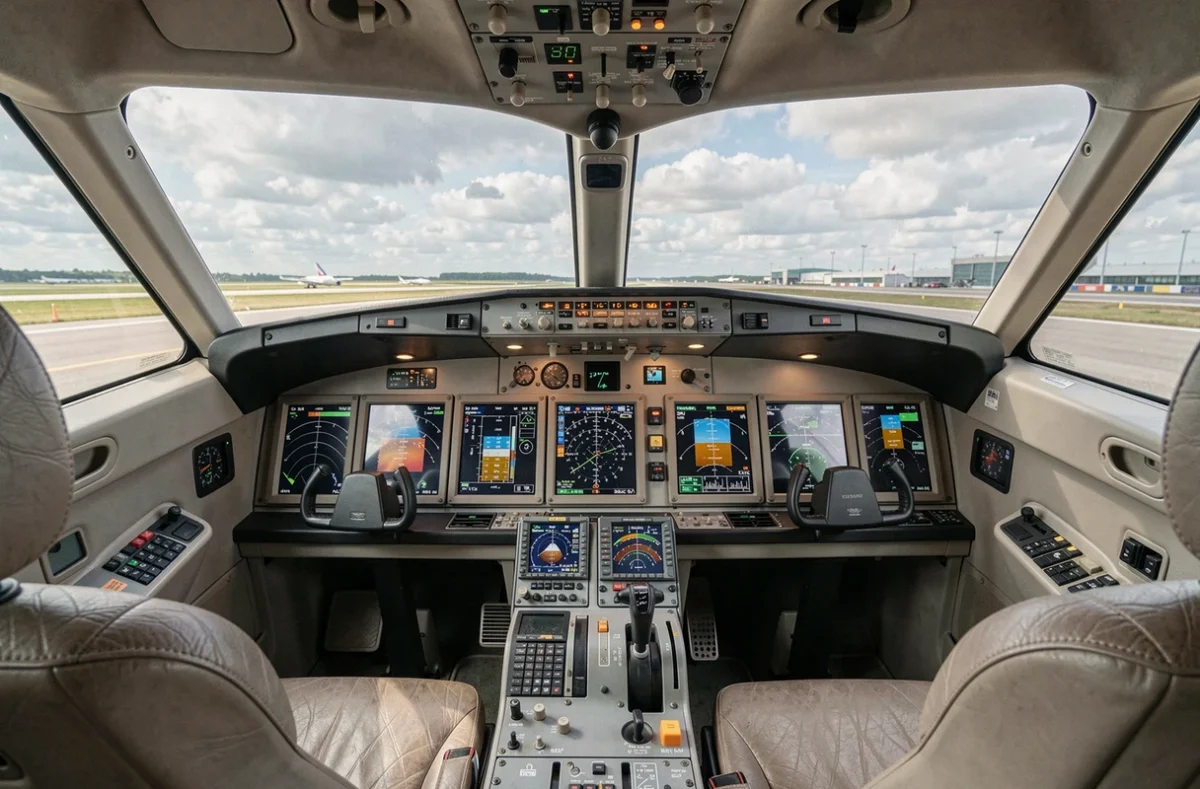
- Direct digital communication between cockpit and control tower, gradually replacing analog voice exchanges.
These developments will not be visible from a window seat, but they condition the aviation sector’s ability to absorb traffic growth in the coming years.
Aviation is going through a period where order books have never been so full, but where the actual production and delivery capacity dictates the pace. Between the forced extension of fleets, the rise of MRO, long-term hydrogen projects, and the overhaul of air traffic control systems, the coming years will be marked by technical trade-offs rather than spectacular announcements.