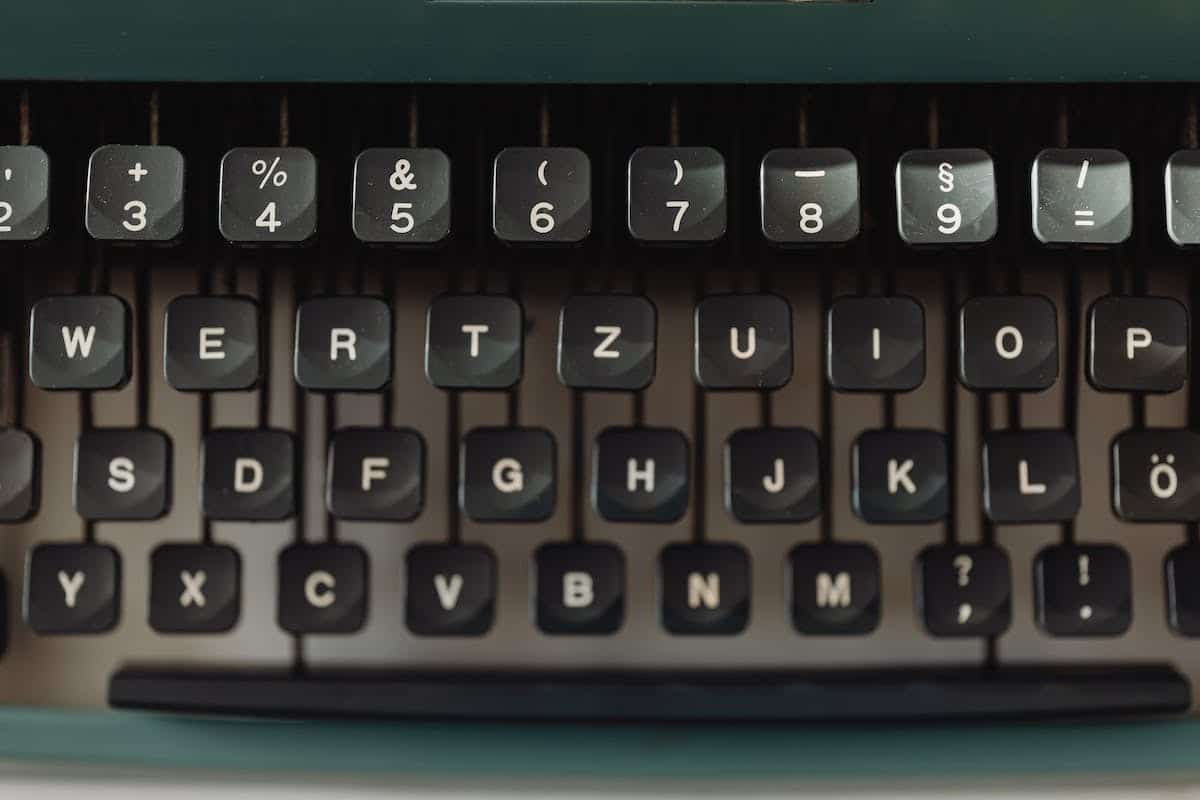
Let’s dive into the fascinating world of the QWERTY keyboard, an omnipresent tool in our daily lives but whose secrets remain unknown to the general public. Its unique layout, which seems illogical at first glance, actually has a rich and complex history. Thus, we propose to embark on a journey through time, back to the era of the typewriter, to understand this indispensable tool. A journey that will lead us to examine the design choices, technical constraints, and ergonomic issues that led to the development of the QWERTY layout.
QWERTY Keyboard: Its Origins and History
Let’s immerse ourselves in the captivating origins and history of the QWERTY keyboard, which is much more than just a typing tool. The story of this layout reveals a fascinating journey through time, dating back to the beginnings of mechanical typewriters in the 19th century. At that time, designers faced a serious problem: when typing quickly on several keys in the same row, they tended to jam. Faced with this major technical inconvenience, Christopher Sholes devised the QWERTY layout.
The idea was simple yet effective: minimize these jams by strategically placing commonly used letters far apart from each other on the keyboard. This innovative solution allowed typewriter operators to avoid typing too quickly, which could cause conflicts between the metal levers corresponding to the different printable characters.
The specific choice of the first six letters • Q-W-E-R-T-Y • proved optimal for avoiding these common mechanical problems; an innovation that was quickly adopted by Remington and Sons Company when they marketed their first typewriter in 1873.
Even today, as we have moved well beyond the initial mechanical constraints thanks to modern digital technologies, using a keyboard with an American layout • in other words, QWERTY • remains largely predominant in various fields for one main reason: it is simply the one that many have learned to type on. The world has long surpassed the era of typewriters, but the QWERTY layout has become so ingrained in our daily lives that it continues to exert its undeniable dominance over our modern keyboards.
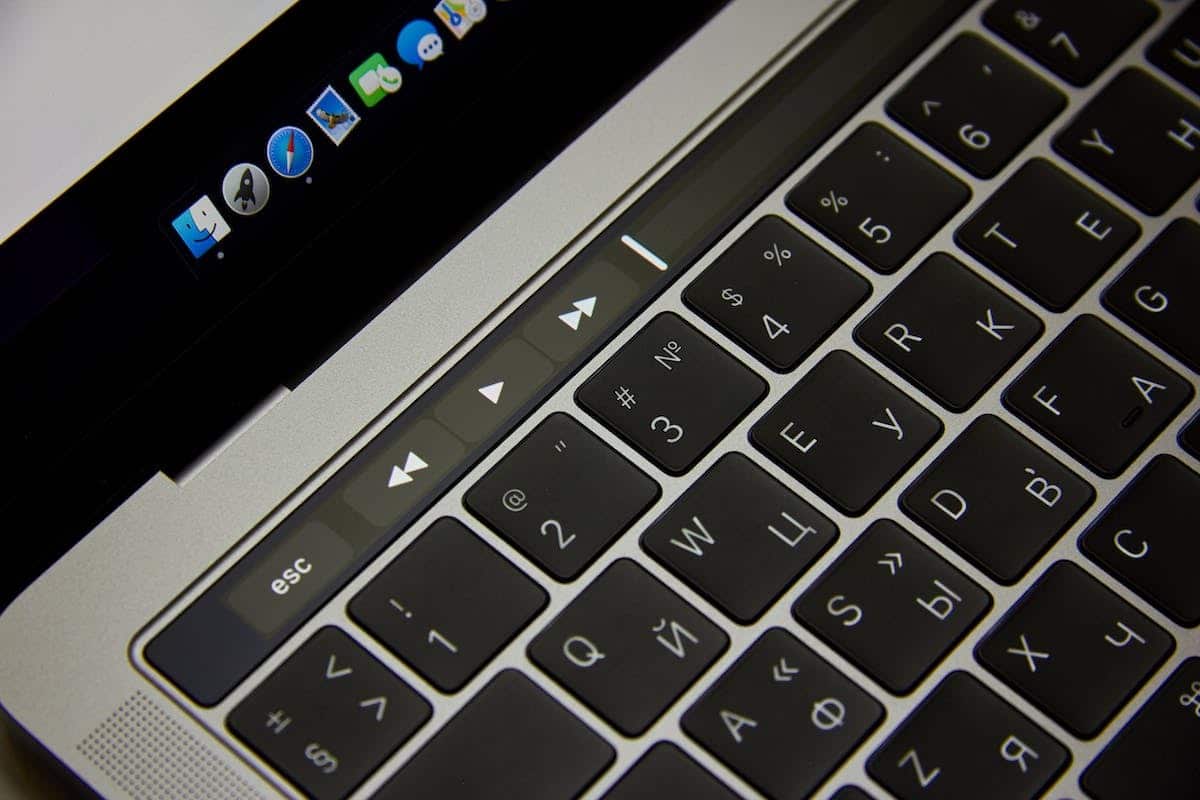
Understanding the Key Layout of the QWERTY Keyboard
Now let’s focus on the key layout of the QWERTY keyboard and seek to understand the reasons behind these choices. It is important to emphasize that this layout was designed to meet the specific needs of the English language. The most frequently used letters in the English language are placed in the center of the keyboard, thus offering quick and ergonomic access.
The placement of the vowels has also been carefully studied. The most commonly used vowels • A, E, I, O, and U • are arranged on a single row at the top of the keyboard. This configuration allows for fluid typing of common English words while avoiding awkward finger crossings.
By closely observing the QWERTY keyboard, one also notices that some numbers and symbols are logically and intuitively distributed around the main letters. For example, the numbers 1 to 0 are located just above the main alphabetical line to facilitate their use during typing.
Another notable feature is the strategic placement of the Shift keys on each side of the keyboard. These keys allow for quick access to uppercase letters without having to completely move one’s hand.
It is also worth mentioning the particular location of certain special characters such as @ or # that are not integral to the English language but are of great importance in our modern digital world. The chosen layout for these characters takes into account their frequent use in certain fields to facilitate typing and improve overall efficiency.
It is important to note that there are other keyboard layouts, including the AZERTY keyboard used in France and the QWERTZ keyboard used in Germany. Each layout has its own advantages and disadvantages, but the popularity of the QWERTY keyboard endures mainly due to its familiarity and early adoption.
The key layout on a QWERTY keyboard is the result of careful consideration aimed at optimizing ergonomics and efficiency during typing. Although some may question its utility in the digital age, it is undeniable that the QWERTY keyboard continues to be an essential reference in our modern daily lives.
Advantages and Disadvantages of the QWERTY Keyboard
Now let’s review the advantages and disadvantages of the QWERTY keyboard. Although this layout was designed with care, it is not without flaws.
Let’s start by addressing its advantages. The main advantage of the QWERTY keyboard lies in its familiarity. Being the standard for many decades, it should be noted that transitioning to a new layout can be difficult for those who are already accustomed to QWERTY.
A major challenge of the QWERTY keyboard lies in its compatibility with other languages. While it is suited for English, it can pose difficulties for non-English speaking users who frequently need to use special characters or symbols specific to their language.
Alternatives to the QWERTY Keyboard
Fortunately, there are alternatives to the QWERTY keyboard that offer solutions to these problems. A popular alternative is the Dvorak keyboard. Unlike QWERTY, the Dvorak layout was designed with ergonomic and linguistic principles in mind.
The Dvorak keyboard places the vowels on the center row for easier access and distributes the consonants more evenly between the two hands. This design aims to minimize finger movement and thus increase typing efficiency.
Another interesting alternative is the Colemak keyboard, which retains a structure similar to QWERTY while making some subtle modifications to improve ergonomics.
Ergonomic Keyboards: For Improved Typing
Ergonomic keyboards have become a popular solution for many users looking to optimize their typing experience. These devices offer specific features aimed at reducing fatigue and discomfort during long sessions in front of the computer.
A commonly cited example is the V-shaped keyboard, which separates the keys into two groupings angled outward, thus mimicking the natural posture of the hands. This configuration allows for a more ergonomic alignment of the wrists, thereby avoiding excessive tension that can lead to muscle pain.
Some models go even further with the introduction of the reverse keyboard. In this innovative design, the keys are arranged on the underside of the keyboard rather than on the top. This creates an anatomically correct position where the palms rest comfortably on the surface while the fingers are positioned above to press the keys.
Another approach is to introduce integrated or removable wrist rests to promote a more neutral posture and relieve pressure on these joints often stressed during prolonged sessions.
Rethinking Key Layout for a Better Typing Experience
It is undeniable that the key layout on keyboards has a significant impact on our typing experience. The traditional QWERTY, while being the standard for decades, no longer necessarily meets current needs in terms of ergonomics and efficiency.
Scientific studies have shown that optimal key positioning can not only improve our typing speed but also reduce the risks of musculoskeletal disorders such as tendinitis or wrist pain.
This is why some designers have set out to completely rethink the classic key layout. Many alternative models have emerged in recent years, offering a more ergonomic and intuitive approach for a better user experience.
Among these alternatives, we have notably mentioned the V-shaped keyboard and the reverse keyboard. Both configurations aim to replicate the natural posture of the hands and minimize discomfort associated with prolonged keyboard use.
Similarly, the introduction of integrated or removable wrist rests also represents a significant advancement in the quest for optimal comfort during our screen time.
It is essential to find the key layout. What works for some may not suit others. It is necessary to find the one that best aligns with our habits and specific needs.
Rethinking the key layout on our keyboards can help improve our typing experience by reducing the risks of fatigue and discomfort. Technological advancements and the various alternatives available now offer users a variety of options to customize their work environment and optimize their productivity. We must remain open to new possibilities that arise in the field of ergonomic keyboards.