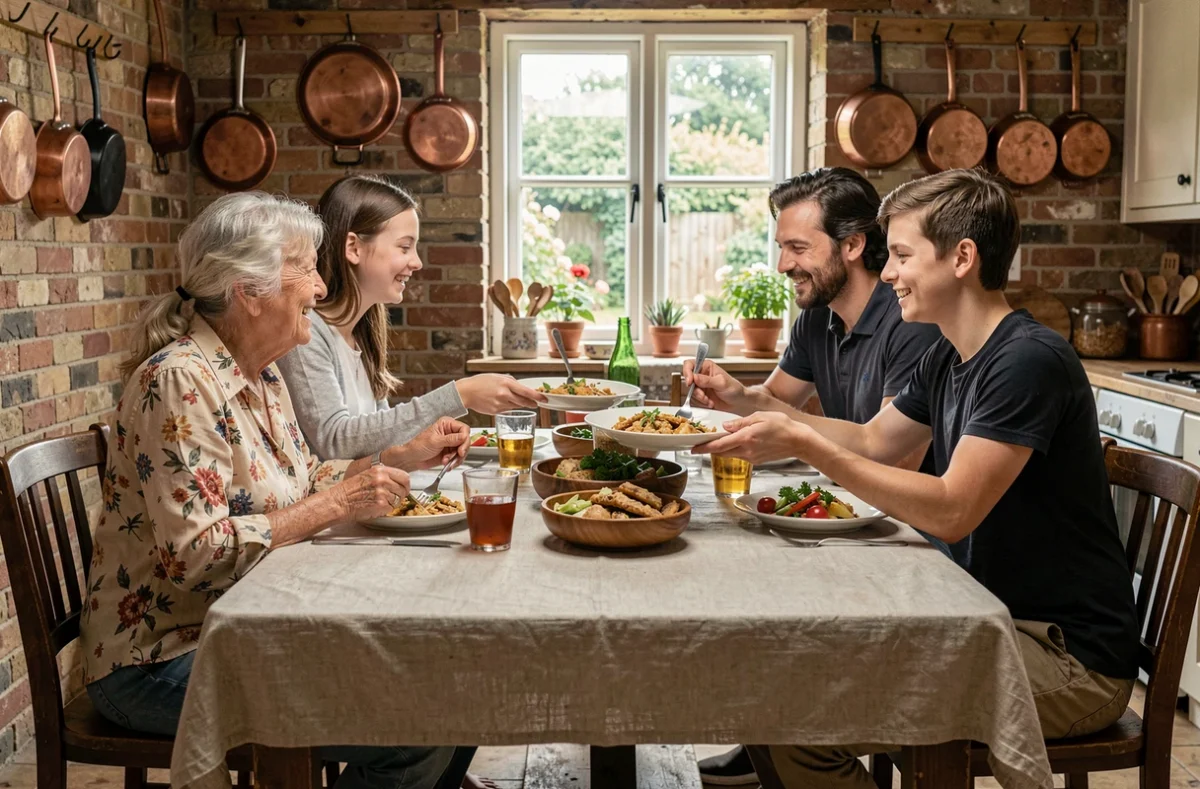
In France, the structure of households is changing: blended families, single-parent households, generations living together longer under the same roof. At the same time, recent studies highlight two factors that modify the quality of family relationships on a daily basis: the role of screens in parent-child interactions and the emotional climate during meals. These findings shift the question of family harmony from the realm of grand principles to that of concrete micro-interactions.
Parental technological interference and family ties
Public Health France uses the term “parental technological interference” to describe a specific phenomenon: a parent’s use of a screen during an interaction with a young child disrupts the quality of the exchange. The issue is not limited to the child’s screen time; it also concerns that of the adult.
This notion changes the usual perspective. Most advice on screens targets children, their exposure times, and the content viewed. Parental technological interference reminds us that the parent’s attentional availability shapes the relationship long before any limitation rules come into play.
Public Health France further emphasizes that prevention should not solely rely on the individual responsibility of families but should also involve education, support, and collective action. This institutional framing suggests that relational difficulties related to screens do not stem from a simple lack of parental will. You can learn more about Jolie Family to explore resources dedicated to family life on a daily basis.
The official French guidelines on screens, updated in the health booklet, now distinguish three age groups (under 3 years, between 3 and 6 years, after 6 years). These recommendations provide a foundation, but they do not address the question of parental usage in the presence of the child, which remains a less documented angle.

Family meals: the emotional climate matters as much as the food on the plate
A study published in Frontiers in Nutrition in September 2026, led by the Gasol Foundation, sheds light on an often-overlooked aspect of family meals. Attentive and regular support for children during meals is associated with a better reported quality of life. Conversely, pressure to eat and dietary restrictions are linked to a lower quality of life.
The authors clarify that the study is cross-sectional. It does not establish a cause-and-effect link between the style of meal support and the child’s well-being. Nevertheless, the correlation remains consistent with what is observed in other studies on family communication.
This result invites us to reconsider the family meal not merely as a nutritional moment but as a relational space. The tone used at the table, the way one reacts to food refusals, and the attention given to the child’s signals contribute to the overall climate of the household.
What this research does not say
The study does not distinguish between family configurations (nuclear family, blended family, single-parent family). It also does not measure the long-term effects of these practices on family ties during adolescence or adulthood. Data is lacking on the sustainability of these associations beyond early childhood.
Family mediation: an underutilized tool for defusing conflicts
The mandatory prior family mediation attempt (TMFPO) exists in French law for certain family disputes. This mechanism requires parties to undergo a mediation session before approaching the family court, under penalty of inadmissibility of the request. Exceptions are provided, particularly in cases of domestic violence.
Family mediation does not aim to reconcile but to restore a channel of communication between conflicting family members. This distinction is important: the goal is not harmony at all costs, but the ability to articulate needs, to hear those of others, and to find functional agreements.
However, the use of mediation remains minority outside of judicial proceedings. Several factors explain this underutilization:
- The lack of awareness of the mechanism among families not engaged in a separation or divorce process
- The persistent association between mediation and couple failure, whereas the mechanism also applies to conflicts between adult parents and children or to inheritances
- The perceived cost, although sessions are accessible through family allowance funds based on household income
When mediation applies outside of divorce
Tensions between parents and adult children, disagreements about the care of an elderly parent, conflicts related to an inheritance: these are all situations where family mediation can intervene. The mechanism is not limited to separating couples.
In the case of intergenerational relationships, mediation sometimes allows for articulating implicit expectations. A parent who expects regular visits, an adult child who needs distance: these contradictory needs generate underlying tensions that mediation can make explicit.
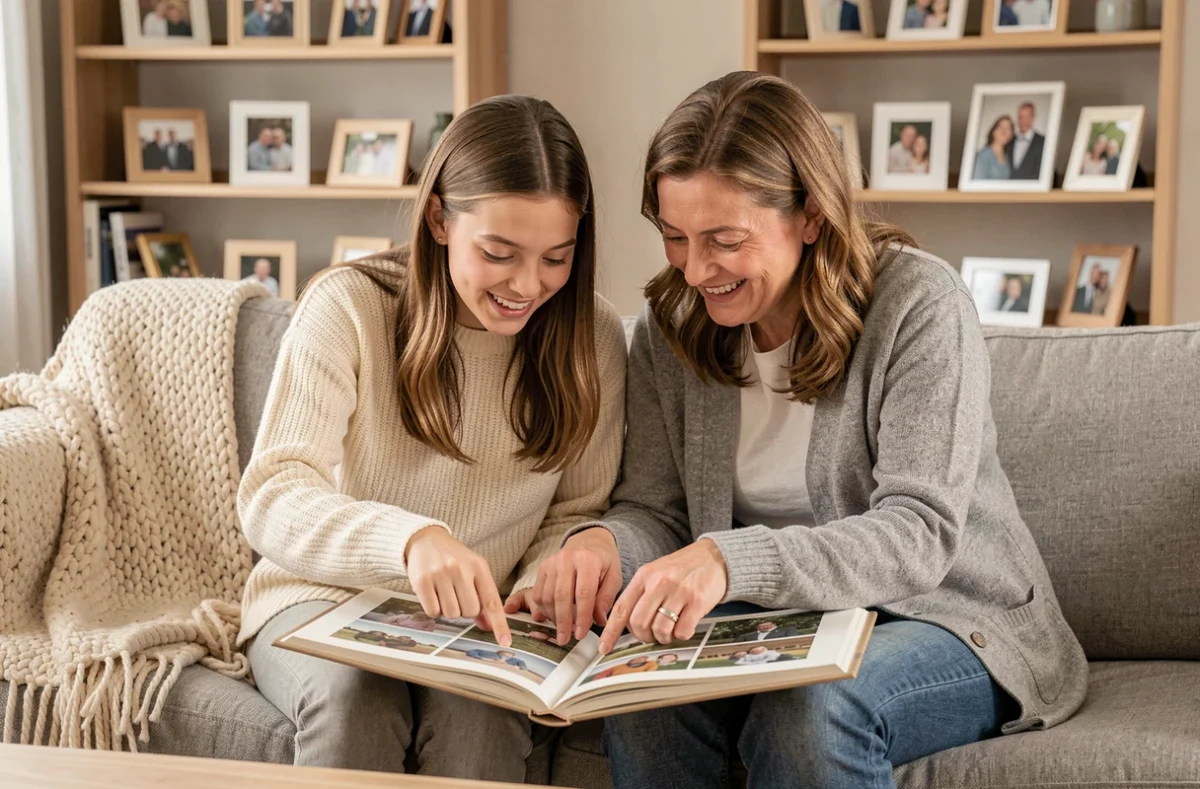
Daily practices that enhance the quality of family relationships
Beyond institutional mechanisms, certain concrete practices modify the quality of exchanges within a household. Research on family communication converges on a few key areas:
- Maintaining screen-free exchange moments, including for adults, during meals and transitions (morning departures, evening returns)
- Formulating disagreements by describing one’s feelings rather than attributing an intention to the other family member
- Accepting that family harmony is not the absence of conflict but the ability to navigate disagreements without breaking communication
- Adapting relational expectations to age and family configuration, without imposing a single model
These practices do not guarantee a tension-free household. They create a framework in which family members have tools to express their needs and hear those of others.
The quality of family ties is played out in brief and repeated interactions. A shared meal without pressure, an evening exchange without phones, a mediation sought before the conflict becomes entrenched: these gestures build family harmony over time, without a promise of perfection.