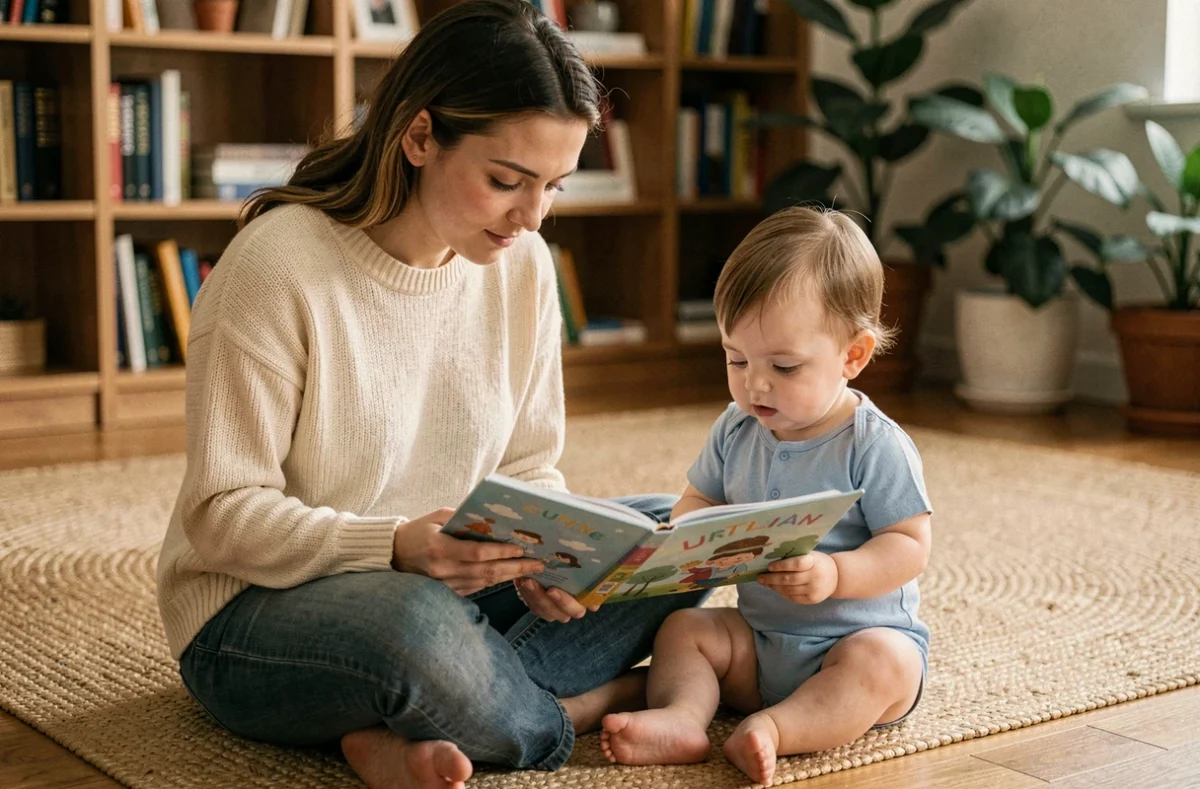
A customizable activity book is a book whose content (name, colors, activities) is tailored to a specific child, with the aim of engaging their senses and motor skills as they grow. Unlike a generic toy, this type of book combines hands-on exploration with storytelling, making it a tool for interaction between adults and children. The WHO also recommends reading or telling stories to infants under one during sedentary periods.
Materials and safety of fabric activity books
Most customizable activity books for toddlers are made from fabric: velvet, cotton, sherpa. This choice is about more than just appearance. A fabric book can be mouthed, crumpled and pulled without the risk of cuts or torn pages. Oeko-Tex certification guarantees that textiles are free from harmful substances, making it an important factor to check before buying.
Safety is not limited to the fabric itself. Sewn-on elements (name letters, decorative buttons, ribbons) must withstand repeated pulling. A poorly secured stitch can turn a decorative detail into a small detachable piece. The CE marking indicates compliance with European requirements, but it does not replace a parent’s careful inspection of the finish.
For books intended to be handled from birth, checking three things is enough: sturdy stitching, no small detachable parts, and care instructions (a machine-washable book stays more hygienic over time).
Among the options available, Babysteps Planner activity books offer customizable editions designed to accompany babies through their early years, with careful attention to materials and built-in activities.
Sensory development and fine motor skills at each age
An activity book offers different benefits at six months than it does at four years. Tailoring the content to a child’s stage of development can make all the difference between an object that gets ignored and one they use every day.
From birth to twelve months
At this age, babies explore through touch and sight. Pages with varied textures (smooth fabric, rough fabric, crinkly elements) stimulate tactile curiosity. Bright color contrasts capture their attention. The book serves more as a sensory toy than a storytelling aid: babies grasp it, turn it over and chew on it.
From one to three years
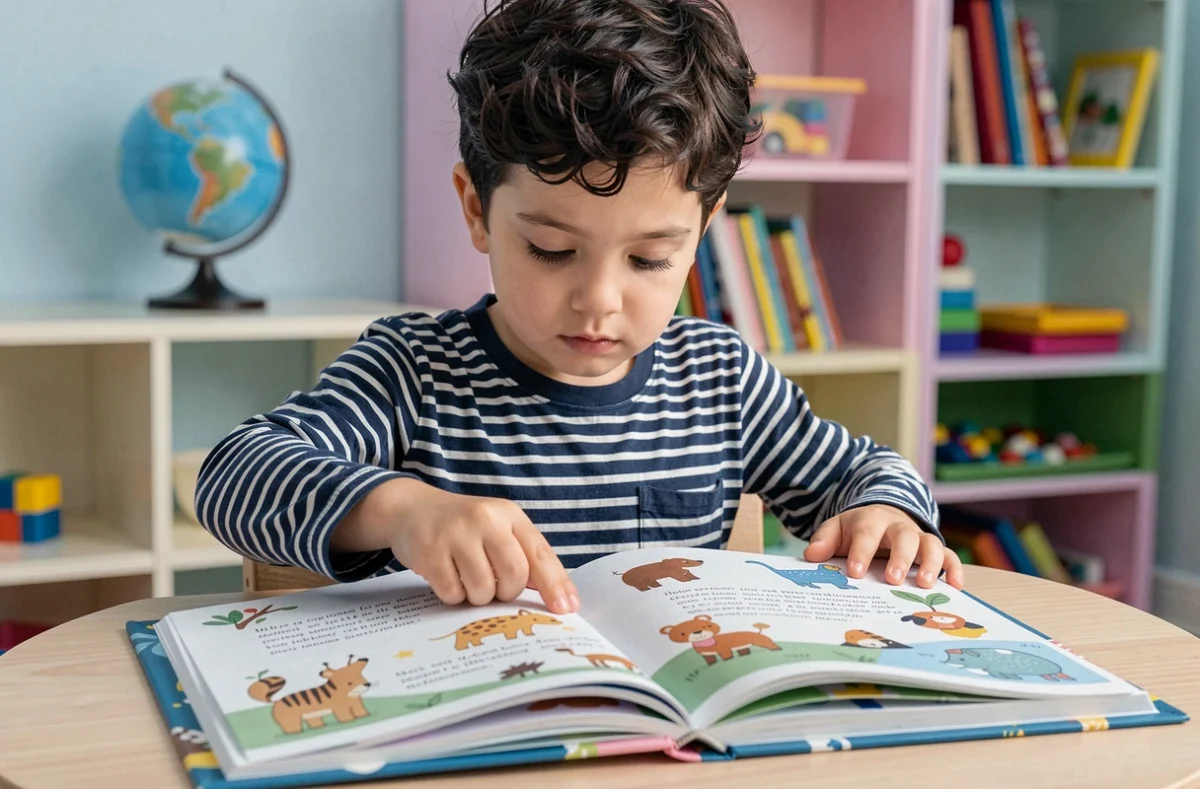
Fine motor skills develop. Children begin to handle hook-and-loop fasteners, zippers and laces built into the pages. This is the age when activities built into the book become a learning tool: threading a button, matching a shape to its place, detaching and repositioning elements. Personalization with the child’s name also takes on new meaning as they gradually recognize the letters that make it up.
From three to six years
The activity book evolves into a storytelling aid. Personalized stories in which the child becomes the main character strengthen identification and interest in reading. Pages can include simple logic games, riddles or early counting concepts. At this stage, the book supports the transition to independent learning.
Customizing an activity book: name, theme and adaptable content
Customization goes far beyond adding a name to the cover. Specialist publishers offer several levels of personalization.
- Including the child’s name in the story: the child appears as a character, which boosts engagement. Letters can also be sewn onto the cover in fabric for a sensory experience from the first few months.
- Choosing a theme: animals, colors, geometric shapes, seasons. Some publishers let you select pages based on the child’s interests, avoiding a one-size-fits-all format.
- Content that adapts to different age groups: removable pages or add-on packs let the same book evolve as the child grows, without having to buy a whole new one.
This adaptable system offers a practical advantage. A book bought at birth that is still relevant at age three lasts far longer than a conventional toy. The initial cost, often higher than that of a standard board book, is justified by its longevity.
Screen-free activity books: a choice in line with current recommendations
Recommendations on screen use among young children are becoming increasingly firm in France. Early childhood care settings are encouraged to limit screen exposure, and families receive similar guidance from healthcare professionals.
In this context, a customizable activity book offers a screen-free activity that engages both hands and language skills. Shared reading, where an adult names things, asks questions and lets the child handle the pages, creates an interaction that digital media cannot replicate in the same way.
A fabric book also has practical advantages: it fits in a bag, needs no batteries or internet connection, and can withstand being dropped. For journeys or waiting rooms, it can replace a screen without causing frustration if the child has been used to handling it since their first few months.
What to look for in a customizable activity book
Not all customizable activity books are created equal. Before choosing one, consider a few practical criteria:
- Age range: a book designed only for the first year will soon be set aside, while an adaptable model remains useful for several years.
- Quality of the finish: reinforced stitching, certified dyes and wash resistance. A book handled daily by a child is subject to real wear and tear.
- Level of customization: name only, choice of pages, adjustable theme. The more detailed the customization, the better the book can meet the child’s specific needs.
- Manufacturing: handmade or industrial, locally made or imported. These factors affect the price, delivery times and whether custom adjustments can be requested.
A well-chosen activity book is no substitute for free play or human interaction. It complements them as a resource for structuring shared moments of discovery between a child and the adult accompanying them.