
At two years old, some children already master complete sentences while others are still babbling a few words. The gap between the rates of language or motor skills acquisition remains considerable, even within the same sibling group. Yet, there is no universal calendar governing these learnings.
Sometimes, it only takes modifying a detail in the routine to see new progress emerge where it was least expected. The immediate environment, the quality of listening provided, and the stability of references play a much greater role than the multitude of activities offered or the latest toys.
Understanding the major stages of awakening in children: what you need to know
The development of the child never progresses in a straight line. From birth, each skill develops in small increments. Seeing a baby grasp an object for the first time is already witnessing the awakening of their fine motor skills. Taking the time to observe each step, from the first babbling to pretend play, from spontaneous smiles to first steps, allows parents to adjust their presence and better anticipate emerging needs.
Establishing routines from early childhood provides a solid framework to rely on. A regular rhythm, fixed meal times, and a bedtime ritual create an inner security that is felt well beyond childhood. These routines are also invaluable for mental health, emotional awakening, and for integrating the child into the family, and later, into a group or community.
Physical activity holds a prominent place: it promotes not only psychological and social well-being but also self-confidence. Running, climbing, jumping: these are all ways for the child to prepare for life in a group, at daycare or school. Similarly, a balanced diet supports both physical and intellectual development, while play nurtures creativity and autonomy.
To explore more deeply the key stages of growth, the diversity of awakening activities, or to better understand daily adjustments, visit the children’s articles on Maman du Net. You will find detailed resources, punctuated with examples, covering all ages of childhood up to school entry.
How to encourage curiosity and autonomy in daily life?
Curiosity awakens when we look at our surroundings with fresh eyes, without prejudice. For a child, the whole world becomes a field of discovery, from the smallest question to the tiniest find. As a parent, your role is to support this movement: encourage initiatives, let them manipulate, understand, and sometimes make mistakes. Make the home a space where experimentation occurs, where learning happens through doing.
Here are some concrete suggestions to support this approach:
- Offer educational activities suited to their age: building games, puzzles, sensory workshops. These activities develop creativity and stimulate problem-solving skills.
- Provide a selection of varied books and let them choose what they want to read. Stories nourish the imagination and foster the ability to project, ask questions, and explore new avenues.
- Involve them in daily tasks: setting the table, tidying up their things, choosing their clothes. These simple actions concretely enhance self-confidence and autonomy.
Give them time to master each new action, without aiming for immediate perfection. Prioritize encouragement over correction, and allow ample space for free play, as this is where the child takes initiative and develops creativity. Guidelines inspired by specialists like Isabelle Filliozat allow for support without hindrance, to guide without controlling everything. Autonomy grows step by step, in an atmosphere of respect and listening, where every question holds value.
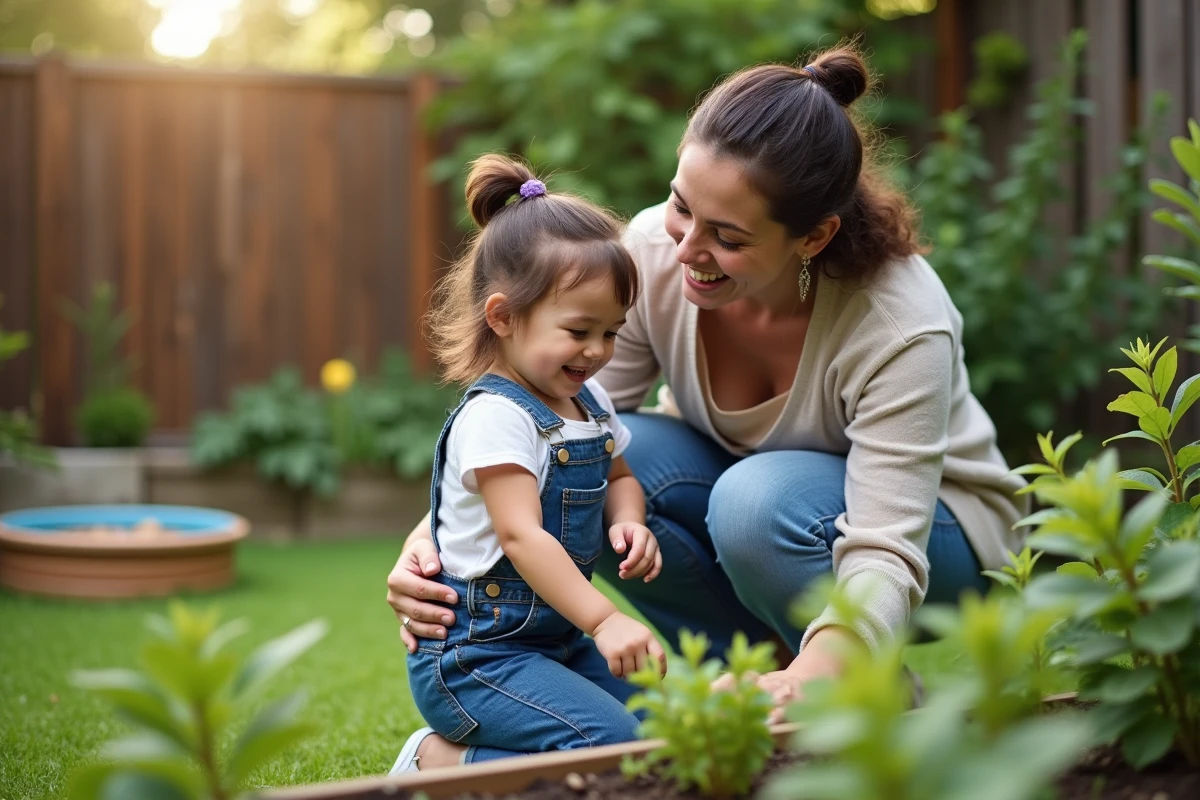
Kind tips to cultivate trust and serenity in the family
The family represents the very first circle where the child draws their sense of security. Here, communication makes all the difference: open the dialogue, welcome emotions without minimizing them. Gentle parenting is primarily a listening posture, attentive to each person’s experiences. This is how a climate of trust is woven, where the child dares to express themselves, try, and evolve.
Positive education values efforts, supports during moments of frustration, and helps articulate what is happening internally. Integrate, even briefly, mindfulness rituals, such as a few minutes of breathing or relaxation exercises recommended by Nathalie Peaucelle. These moments of centering facilitate stress management, help welcome emotions, and promote a return to calm.
Here are some concrete ideas to integrate into your daily life:
- Regularly organize times for shared play: they create bonds and develop sociability.
- Introduce your child to yoga or short relaxation sessions, drawing inspiration from advice by Nadège Pétrel, to help them better manage their feelings.
Interactions, whether at home or outside, shape self-confidence and foster development. Increasing opportunities for discovery, mixing active moments with calm times, creates a balance where every family member finds their place. Awakening and well-being are never the result of a one-size-fits-all recipe, but the fruit of attentive support, day by day. Who knows what unsuspected strengths will reveal themselves tomorrow, in a daily life where every detail matters?